Orkney research project seeks spring barley varieties suited to the Northern Isles
A three-year research project is assessing 20 spring barley varieties from across northwestern Europe to identify those best suited to the growing conditions of Orkney and Northeast Scotland.

The project, “Searching Northwards for Spring Barley Varieties Adapted to Northeast Scotland,” is led by the Agronomy and Agriculture Institute at UHI Orkney in partnership with the James Hutton Institute in Dundee and funded by the Mains of Loirston Charitable Trust. Dr Henry Creissen, Director of the Institute, says locally relevant trials are needed because results from further south may not reflect Orkney’s high-latitude, oceanic climate.
Reducing reliance on imported cereals is another reason to identify varieties that perform well locally. Shipping adds to the economic and environmental costs of bringing grain to the Northern Isles, while barley grain and straw are both valuable to Orkney’s livestock sector.
“In contrast to the selection criteria used by UK breeders, who are largely based in the east of England, earliness and standing ability are key traits for Orkney. Our high density of beef cattle means both the straw and grain are highly valued. By providing locally relevant evidence and advice, farmers in Orkney and Northeast mainland will be more likely to adopt economically and environmentally sustainable practices—which can be as simple as switching to more efficient barley varieties,” says Dr Creissen.
The trial compares 20 varieties sourced from seed merchants and breeders across northwestern Europe with popular varieties currently grown in the area and bere barley, a traditional crop cultivated in Orkney for thousands of years. Researchers are testing two fertiliser input levels in fungicide-treated and untreated plots to assess how the varieties respond to fertiliser, particularly nitrogen, and fungicides.
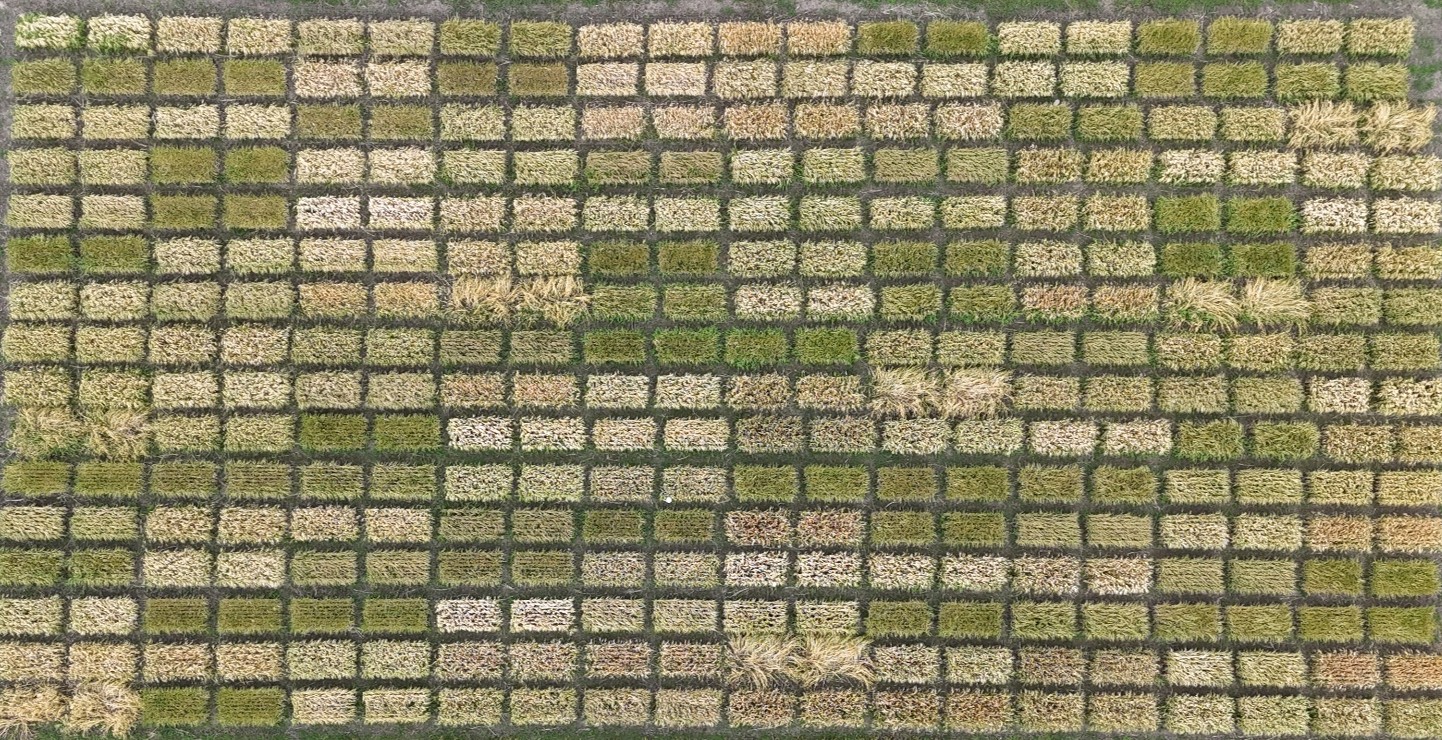 Field trials at UHI Orkney Agronomy and Agriculture Institute. The photograph shows differences in maturity between spring barley varieties.
The research will run across three growing seasons—2026, 2027 and 2028—to assess how consistently varieties perform in different seasonal conditions. Initial findings from 2026 have identified several early-maturing, high-yielding varieties, including disease-resistant varieties of Scandinavian origin, with potential for cultivation in Orkney.
The Mains of Loirston Charitable Trust was established in 2007 by the late Alexander Williams Allan to support schoolchildren and students’ education and promote agricultural education and research in Scotland. In 2016, the Trust established an Innovation Fund to encourage practical, on-farm research that benefits Scottish agriculture.